Asia
South Korea
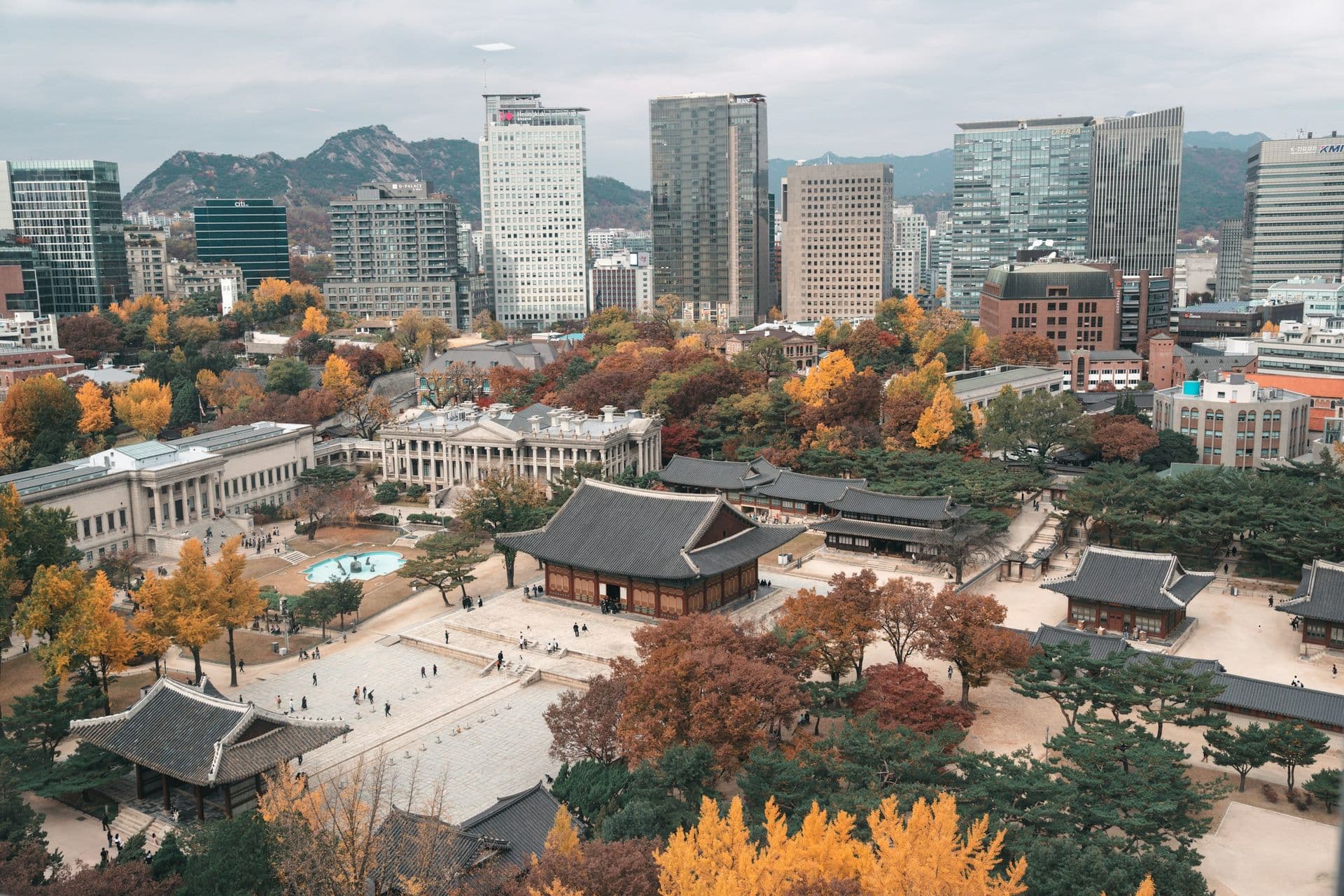
Palaces and neon in Seoul, temple stays in the mountains and barbecue with a bottle of soju.
South Korea is small, safe and fast to get around. Seoul mixes royal palaces and hillside hanok villages with all-night markets, and the KTX gets you to Busan’s beaches and fish markets in under three hours.
Beyond the cities, Gyeongju is full of royal tombs and temples, Seoraksan has some of the best hiking in Asia, and the volcanic island of Jeju is a short, cheap flight away.
Good to know
- Time zone
- GMT+9
- Plugs
- Types C and F, 220V
- Emergency numbers
- 112 police, 119 fire and ambulance, 1330 tourist helpline
- Tap water
- Safe to drink
- Traffic drives on the
- Right
- Tipping
- Not expected anywhere, and sometimes politely refused.
- SIM cards
- KT, SK Telecom and LG U+ sell tourist SIMs and eSIMs with unlimited data for about 30,000–50,000 won for a couple of weeks; pick one up at Incheon Airport.
When to go to South Korea
Best months to go: April to May and September to October. Pick a month to see what it’s like.
Bars show rainfall; numbers are the average daytime high. Amber marks the best months to go.
SeptemberBest time to go
Cooler and clearer. The Chuseok holiday fills trains and closes some sights.
- Daytime high
- 26°C
- Rainfall
- 170 mm
- Crowds
- Busy
| Month | Daytime high | Rainfall | Crowds | Best time to go |
|---|---|---|---|---|
| January | 2°C | 20 mm | Quiet | No |
| February | 5°C | 25 mm | Quiet | No |
| March | 11°C | 45 mm | Busy | No |
| April | 18°C | 75 mm | Peak season | Yes |
| May | 23°C | 105 mm | Busy | Yes |
| June | 27°C | 135 mm | Busy | No |
| July | 29°C | 395 mm | Busy | No |
| August | 30°C | 350 mm | Busy | No |
| September | 26°C | 170 mm | Busy | Yes |
| October | 20°C | 50 mm | Peak season | Yes |
| November | 12°C | 50 mm | Busy | No |
| December | 4°C | 20 mm | Quiet | No |
What South Korea costs
Work out a budget for your trip, then check what everyday things cost.
$770for 14 days, about $55 a day (₩1,080,000 in total)
| Cost | Per day | For the trip | |
|---|---|---|---|
| Bed | $20 | $280 | |
| Food and drink | $18 | $252 | |
| Getting around | $8 | $112 | |
| Things to do | $5 | $70 | |
| Everything else | $4 | $56 |
Per person, in US dollars. Flights and insurance not included.
What things cost
- Bowl of bibimbap₩11,000, about $7.86
- Kimbap roll from a snack shop₩4,000, about $2.86
- Bottle of soju in a restaurant₩5,500, about $3.93
- Americano in a café₩4,500, about $3.21
- Korean barbecue, per person₩18,000, about $13
- Hostel dorm bed in Seoul₩28,000, about $20
- Seoul subway ride₩1,550, about $1.11
- KTX, Seoul to Busan₩59,800, about $43
Routes through South Korea
Where to go and how long to stay, for the time you’ve got.
14 nights, 5 stops
A loop from Seoul to the east coast mountains, the old capital of Gyeongju and Busan, with a food stop in Jeonju on the way back.
Seoul
4 nights
Palaces, Bukchon’s hanok lanes, Gwangjang Market and a DMZ day trip.
Sokcho
2 nights
Hike in Seoraksan National Park and eat fresh squid by the harbour.
Gyeongju
3 nights
Royal burial mounds, Bulguksa Temple and bike rides between the sights.
Busan
3 nights
Beaches, the Jagalchi fish market and the painted houses of Gamcheon.
Jeonju
2 nights
A hanok village and the best bibimbap in the country.
Getting around
Train
$15–45 for most KTX trips
The KTX high-speed train links Seoul, Busan and the big cities. Slower Mugunghwa trains cost about half as much.
Bus
$10–25 for an intercity express bus
Comfortable and frequent, and often the best option for places like Sokcho, Andong and Jeonju.
Flight
$30–70 one way to Jeju
Seoul to Jeju is one of the busiest air routes in the world, so fares are cheap if you book a few days ahead.
Ferry
$30–60 to Jeju
Overnight and day ferries run from Mokpo, Wando and Busan. Slower than flying but a nice change.
What to eat and drink
Bibimbap
Rice topped with vegetables, meat, egg and chilli paste, mixed at the table.
₩11,000, about $7.86
Samgyeopsal
Thick slices of pork belly grilled at your table and wrapped in lettuce.
₩17,000, about $12
Tteokbokki
Chewy rice cakes in a sweet, spicy red sauce, sold from street carts.
₩5,000, about $3.57
Kimchi jjigae
A bubbling kimchi and pork stew served with rice. Cheap comfort food.
₩9,000, about $6.43
Dwaeji gukbap
Busan’s milky pork and rice soup, eaten at any hour.
₩10,000, about $7.14
Soju
The national spirit, sold in green bottles and drunk with almost every meal.
₩5,500, about $3.93
Say it like a local
A few words go a long way. Tap “Hear it” to listen, where your browser can.
Hello
안녕하세요
Say it like: an-nyong-ha-say-yo
Thank you
감사합니다
Say it like: kam-sa-ham-ni-da
How much is it?
얼마예요?
Say it like: ol-ma-yay-yo
This one, please
이거 주세요
Say it like: ee-go joo-say-yo
Not spicy, please
안 맵게 해 주세요
Say it like: an maep-kay hay joo-say-yo
Delicious
맛있어요
Say it like: ma-shi-so-yo
Excuse me (to call staff)
저기요
Say it like: jo-gi-yo
Cheers!
건배!
Say it like: gun-bay
Questions travellers ask
Does Google Maps work in Korea?
Only partly: it shows public transport but not walking or driving directions. Download Naver Map or KakaoMap, both of which have English menus.
Do I need cash?
Hardly. Cards work almost everywhere, but carry some won for markets and street food. Buy a T-money card for the subway, buses and convenience stores.
How do I book the KTX?
Use the Korail website or the Korail Talk app. Book a few days ahead for weekends and a few weeks ahead for Chuseok and Seollal.
Is the DMZ worth visiting?
For most people, yes. Tours from Seoul cost about $50–100 and must be booked in advance; tours sometimes close at short notice when tensions rise.
How can I keep costs down?
Sleep in hostels or guesthouses, eat at kimbap chains and convenience stores, and use buses instead of the KTX. Palaces and temples cost only a few dollars to enter.