South America
Colombia
Caribbean coast, coffee country and cities that dance until morning.
Colombia has become one of the most popular stops in South America. Medellín and Bogotá are lively and easy to get around, and the walled city of Cartagena is at its best in the evening.
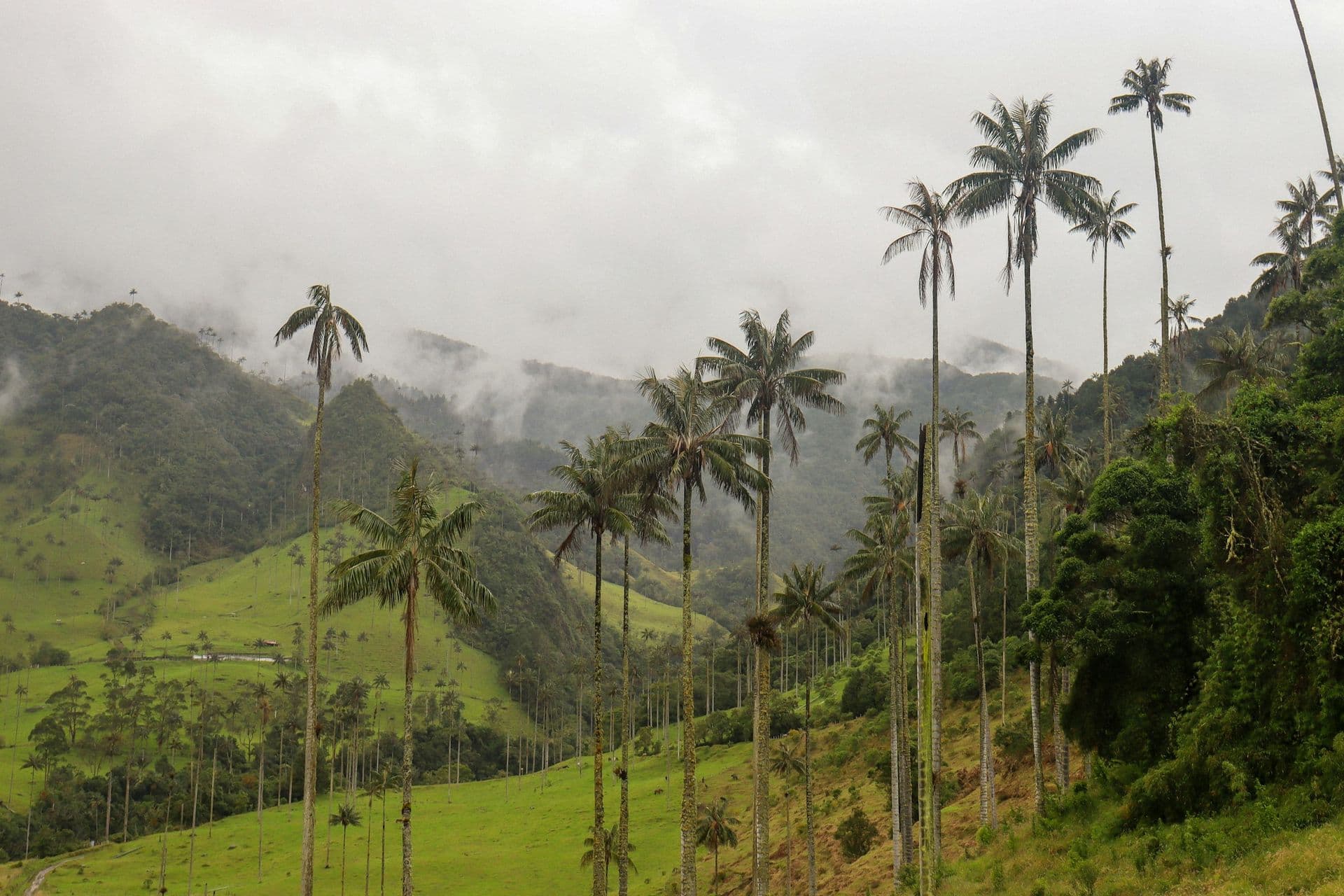
Head into the coffee region to walk among the giant wax palms of the Cocora Valley, then north to the beaches and jungle of Tayrona National Park.
Good to know
- Time zone
- GMT-5
- Plugs
- Types A and B, 110V
- Emergency numbers
- 123 for police, ambulance and fire
- Tap water
- Drink bottled or filtered
- Traffic drives on the
- Right
- Tipping
- Restaurants often add an optional 10% service charge to the bill; you can decline it, but most people pay.
- SIM cards
- Claro, Movistar and Tigo SIMs cost a few thousand pesos, and a month of data is around 30,000–50,000 pesos.
When to go to Colombia
Best months to go: July to August and December to March. Pick a month to see what it’s like.
Bars show rainfall; numbers are the average daytime high. Amber marks the best months to go.
September
The rains return. Quiet hostels and lower prices.
- Daytime high
- 27°C
- Rainfall
- 155 mm
- Crowds
- Quiet
| Month | Daytime high | Rainfall | Crowds | Best time to go |
|---|---|---|---|---|
| January | 28°C | 60 mm | Peak season | Yes |
| February | 28°C | 80 mm | Busy | Yes |
| March | 28°C | 120 mm | Busy | Yes |
| April | 27°C | 165 mm | Quiet | No |
| May | 27°C | 190 mm | Quiet | No |
| June | 28°C | 120 mm | Busy | No |
| July | 28°C | 100 mm | Busy | Yes |
| August | 28°C | 120 mm | Busy | Yes |
| September | 27°C | 155 mm | Quiet | No |
| October | 26°C | 190 mm | Quiet | No |
| November | 26°C | 150 mm | Quiet | No |
| December | 27°C | 90 mm | Peak season | Yes |
What Colombia costs
Work out a budget for your trip, then check what everyday things cost.
$518for 14 days, about $37 a day (COP 2,070,000 in total)
| Cost | Per day | For the trip | |
|---|---|---|---|
| Bed | $12 | $168 | |
| Food and drink | $10 | $140 | |
| Getting around | $6 | $84 | |
| Things to do | $6 | $84 | |
| Everything else | $3 | $42 |
Per person, in US dollars. Flights and insurance not included.
What things cost
- Almuerzo, the set lunchCOP 18,000, about $4.50
- Arepa from a street stallCOP 5,000, about $1.25
- Cup of tinto (black coffee)COP 2,000, about $0.50
- Bottle of local beerCOP 5,000, about $1.25
- Hostel dorm bed in MedellínCOP 60,000, about $15
- Bus, Medellín to SalentoCOP 75,000, about $19
- Tayrona National Park entryCOP 88,000, about $22
Routes through Colombia
Where to go and how long to stay, for the time you’ve got.
14 nights, 5 stops
The highlights in a straight line: Bogotá, the coffee region and Medellín, then a flight to the Caribbean coast.
Bogotá
2 nights
Street art in La Candelaria and the Gold Museum.
Salento
3 nights
Walk among the giant wax palms of the Cocora Valley and tour a coffee farm.
Medellín
4 nights
Ride the cable cars, visit Comuna 13 and take a day trip to Guatapé.
Cartagena
3 nights
Colourful walled old town, best explored in the cool of the evening.
Tayrona
2 nights
Jungle trails to palm-lined beaches, with a night in a hammock.
Getting around
Bus
$10–30 for a long trip
Comfortable coaches link every city, but mountain roads are slow and winding. Bring a jumper for the air conditioning.
Flight
$30–80 one way
Avianca, LATAM, Wingo and JetSMART often cost little more than the bus and save a full day.
Cable car
Under $1 with a metro ticket
The Metrocable in Medellín climbs into the hillside neighbourhoods and is part of the metro network.
Jeep / 4x4
$1–2 a ride
Old Willys jeeps run from Salento to the Cocora Valley and to villages in the coffee region.
Boat
$15–30 a trip
Speedboats run from Cartagena to the Rosario Islands and from Taganga to the beaches of Tayrona.
What to eat and drink
Bandeja paisa
A huge plate of beans, rice, pork belly, sausage, egg and plantain from Medellín.
COP 30,000, about $7.50
Ajiaco
A Bogotá chicken and potato soup served with cream, capers and avocado.
COP 25,000, about $6.25
Arepa de huevo
A fried corn pocket with an egg inside, sold on the Caribbean coast.
COP 5,000, about $1.25
Empanadas
Crisp corn pastries filled with meat and potato, with a spicy ají sauce.
COP 2,000, about $0.50
Jugo de lulo
A tangy juice from a local fruit, made with water or milk.
COP 6,000, about $1.50
Tinto
Small, sweet black coffee sold from flasks on every street corner.
COP 2,000, about $0.50
Say it like a local
A few words go a long way. Tap “Hear it” to listen, where your browser can.
Hello
Hola
Say it like: oh-lah
How's it going?
¿Qué más?
Say it like: keh mahs
Thank you
Gracias
Say it like: grah-see-ahs
You're welcome
Con gusto
Say it like: kon goos-toh
How much is it?
¿Cuánto vale?
Say it like: kwan-toh vah-leh
The bill, please
La cuenta, por favor
Say it like: lah kwen-tah por fah-vor
Cool, great
¡Qué chévere!
Say it like: keh cheh-veh-reh
Cheers!
¡Salud!
Say it like: sah-lood
Questions travellers ask
Is Colombia safe?
The main backpacker route is well travelled and generally fine. Follow the local rule of "no dar papaya": do not flash your phone or valuables, and use app taxis at night.
Can I drink the tap water?
In Bogotá and Medellín it is treated and most people drink it. On the coast and in small towns, stick to bottled or filtered water.
How hard is the Lost City trek?
It takes four or five days through hot, humid jungle, with river crossings and steep climbs. You must go with a licensed operator, and the price of around $400 includes food and hammocks.
Do I need cash?
Yes, for buses, small restaurants and markets. Bancolombia and Davivienda ATMs are reliable; use ones inside banks or shopping centres.
Do I need any vaccinations?
A yellow fever jab is recommended, and some national parks, including Tayrona, may ask to see the certificate. See a travel clinic a few weeks before you go.