Europe
Croatia
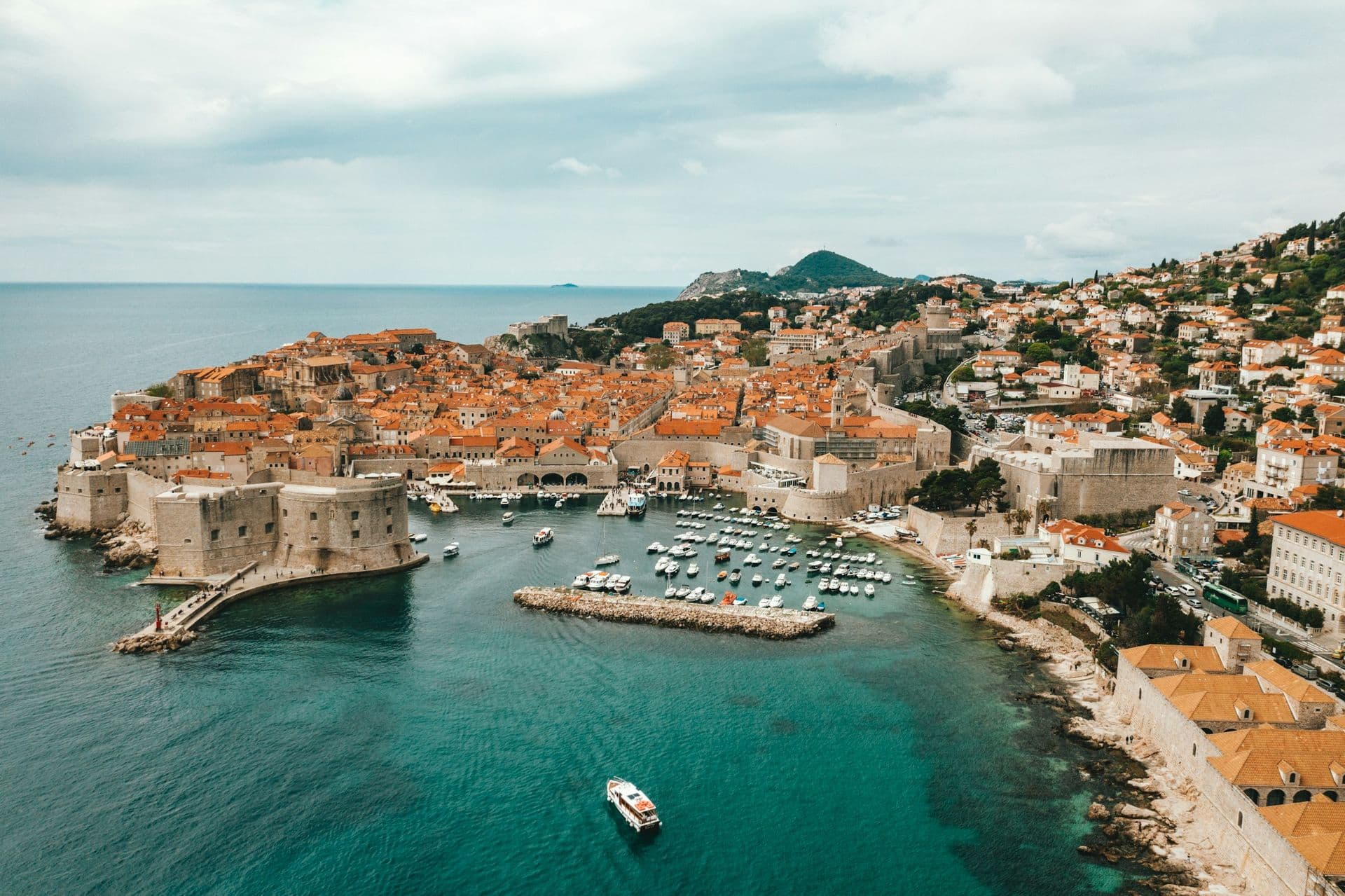
Walled towns, turquoise lakes and ferries out to a thousand islands on the Adriatic.
Croatia is a coastline trip. Most routes run south from Zagreb or Zadar to Split and Dubrovnik, with detours to the lakes and waterfalls of Plitvice and ferries out to islands like Hvar, Vis and Korčula.
Summer is party season on the coast, and prices rise to match. Come in May, June or September for warm seas, cheaper beds and old towns you can actually walk through.
Good to know
- Time zone
- GMT+1, GMT+2 in summer
- Plugs
- Types C and F, 230V
- Emergency numbers
- 112 for all emergencies
- Tap water
- Safe to drink
- Traffic drives on the
- Right
- Tipping
- Not expected, but rounding up or leaving about 10% for good service in restaurants is common.
- SIM cards
- A1, Hrvatski Telekom and Telemach prepaid SIMs with plenty of data cost about €10–15, and EU SIMs roam at no extra cost.
When to go to Croatia
Best months to go: May to June and September. Pick a month to see what it’s like.
Bars show rainfall; numbers are the average daytime high. Amber marks the best months to go.
SeptemberBest time to go
Warm sea, softer prices and fewer crowds. One of the best months.
- Daytime high
- 26°C
- Rainfall
- 80 mm
- Crowds
- Busy
| Month | Daytime high | Rainfall | Crowds | Best time to go |
|---|---|---|---|---|
| January | 11°C | 75 mm | Quiet | No |
| February | 12°C | 70 mm | Quiet | No |
| March | 14°C | 70 mm | Quiet | No |
| April | 18°C | 65 mm | Busy | No |
| May | 23°C | 60 mm | Busy | Yes |
| June | 27°C | 50 mm | Busy | Yes |
| July | 30°C | 25 mm | Peak season | No |
| August | 30°C | 45 mm | Peak season | No |
| September | 26°C | 80 mm | Busy | Yes |
| October | 21°C | 85 mm | Quiet | No |
| November | 16°C | 110 mm | Quiet | No |
| December | 12°C | 110 mm | Quiet | No |
What Croatia costs
Work out a budget for your trip, then check what everyday things cost.
$1,064for 14 days, about $76 a day (€926 in total)
| Cost | Per day | For the trip | |
|---|---|---|---|
| Bed | $32 | $448 | |
| Food and drink | $20 | $280 | |
| Getting around | $12 | $168 | |
| Things to do | $8 | $112 | |
| Everything else | $4 | $56 |
Per person, in US dollars. Flights and insurance not included.
What things cost
- Slice of burek€3, about $3.45
- Coffee in a café€2.50, about $2.87
- Half litre of Ožujsko beer€4.50, about $5.17
- Plate of ćevapi€12, about $14
- Hostel dorm bed in Split in summer€35, about $40
- Bus, Split to Dubrovnik€25, about $29
- Plitvice Lakes ticket in summer€40, about $46
Routes through Croatia
Where to go and how long to stay, for the time you’ve got.
14 nights, 6 stops
From Zagreb to the lakes, then down the Dalmatian coast with an island stop before Dubrovnik.
Zagreb
2 nights
The Upper Town, the Museum of Broken Relationships and café culture.
Plitvice Lakes
1 night
Boardwalks over turquoise lakes and waterfalls. Arrive at opening time.
Zadar
2 nights
The Sea Organ and the best sunset on the coast.
Split
3 nights
Live inside Diocletian’s Palace and swim at Bačvice beach.
Hvar
3 nights
Beach clubs, lavender fields and boat trips to the Pakleni islands.
Dubrovnik
3 nights
Walk the city walls early and kayak round Lokrum island.
Getting around
Bus
$10–35 for a long trip
Buses are the backbone of travel in Croatia and run up and down the coast many times a day. Expect a small fee for big bags.
Ferry
$5–25 a crossing
Jadrolinija and TP Line catamarans link Split with Hvar, Vis and Korčula. Buy tickets early in summer.
Private car
$35–70 a day to hire
Useful for Istria and the inland parks. Parking in the old towns is expensive and scarce.
Flight
$40–90 one way
Croatia Airlines flies Zagreb to Split and Dubrovnik, handy if you are short of time.
What to eat and drink
Burek
Flaky pastry stuffed with cheese or meat. The standard breakfast, often with a yoghurt drink.
€3, about $3.45
Ćevapi
Small grilled sausages in flatbread with onion and ajvar pepper relish.
€12, about $14
Crni rižot
Black risotto made with cuttlefish ink. It will turn your teeth black.
€16, about $18
Peka
Lamb or octopus slow-cooked under a bell covered in embers. Order it a day ahead.
€25, about $29
Štrukli
Baked dough filled with cottage cheese and cream, a Zagreb speciality.
€9, about $10
Rakija
Strong fruit brandy, offered as a welcome, a digestif or a cure for anything.
€3, about $3.45
Say it like a local
A few words go a long way. Tap “Hear it” to listen, where your browser can.
Hi
Bok
Say it like: bohk
Good day
Dobar dan
Say it like: doh-bar dahn
Thank you
Hvala
Say it like: hvah-lah
How much is it?
Koliko košta?
Say it like: koh-lee-koh kosh-tah
A beer, please
Jedno pivo, molim
Say it like: yed-noh pee-voh, moh-leem
The bill, please
Račun, molim
Say it like: rah-choon, moh-leem
Where is the bus station?
Gdje je autobusni kolodvor?
Say it like: gdyeh yeh ow-toh-boos-nee koh-loh-dvor
Cheers!
Živjeli!
Say it like: zhee-vyeh-lee
Questions travellers ask
Is Croatia expensive?
In July and August on the coast, close to western European prices. Travel in May, June or September, eat at konobas (family taverns) and bakeries, and it is much more manageable.
Do I need to book Plitvice?
Yes, in summer. Tickets are sold for timed entry online and cost €40 from June to September, less out of season. Arrive early to beat the tour buses.
How do I get to the islands?
Split is the main hub, with car ferries and faster catamarans to Hvar, Brač, Vis and Korčula. In summer, buy catamaran tickets a day or two ahead.
Are there sandy beaches?
Not many. Most beaches are pebble or rock, so water shoes help. Zlatni Rat on Brač and the beaches of Lopud are exceptions.
Can I pop into Bosnia or Montenegro?
Easily. Mostar and Kotor are popular day trips or overnight stops from Dubrovnik and Split, and buses cross the border daily.