Asia
Japan
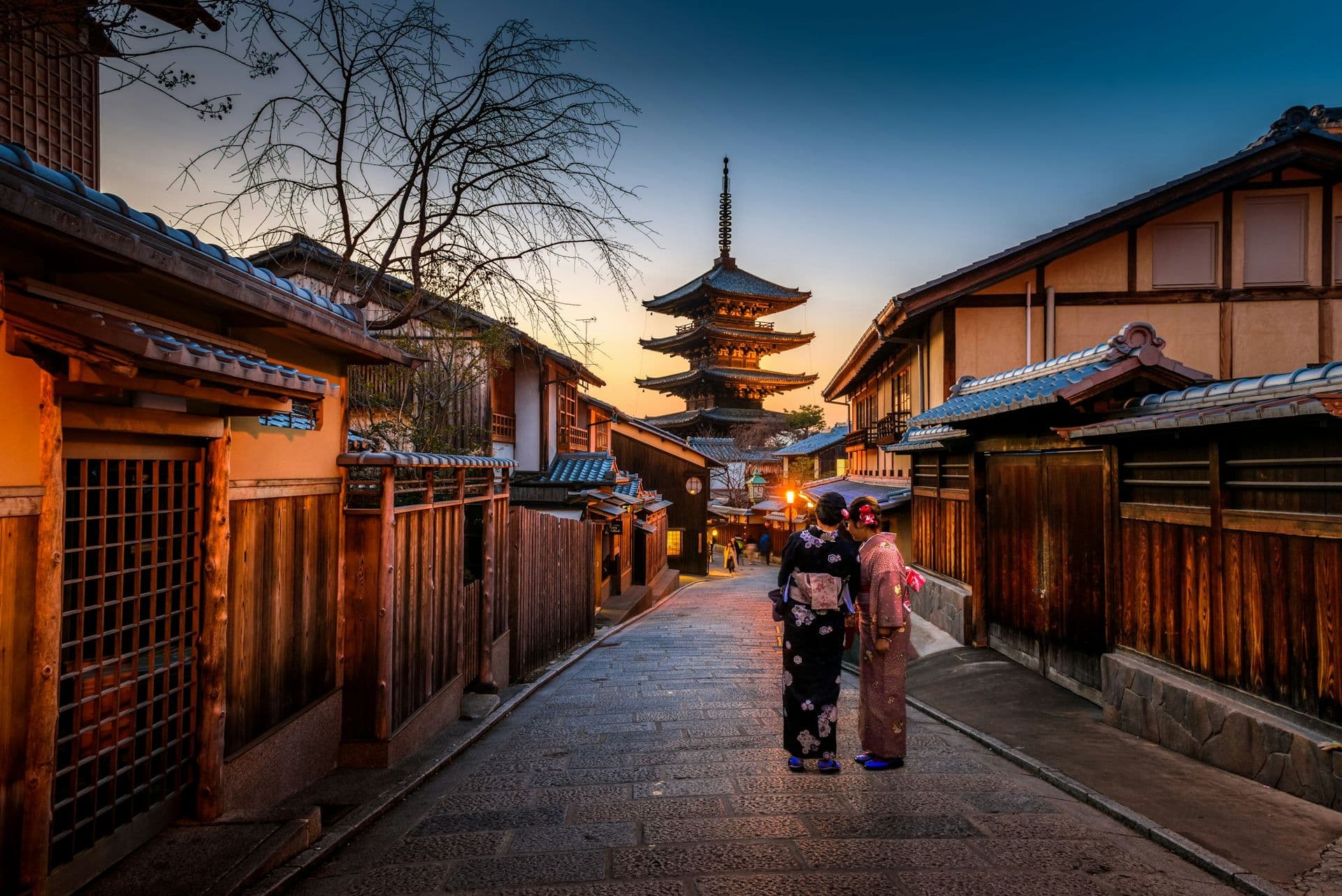
Temples before breakfast, neon after dark, and trains that leave on the second.
Japan is easier on a budget than its reputation suggests. Capsule hotels and hostels are spotless, convenience store meals are genuinely good, and a rail pass turns the whole country into a day trip.
Most first trips follow Tokyo, Kyoto and Osaka, but the mountain villages of the Japanese Alps and the islands of the Seto Inland Sea are where it gets quiet.
Good to know
- Time zone
- GMT+9
- Plugs
- Types A and B, 100V
- Emergency numbers
- 110 police, 119 ambulance and fire
- Tap water
- Safe to drink
- Traffic drives on the
- Left
- Tipping
- Not expected and can cause confusion, as good service is part of the price.
- SIM cards
- A tourist eSIM with 10GB of data costs around 3,000 yen, or pick up a data SIM from a vending machine at the airport.
When to go to Japan
Best months to go: March to May and October to November. Pick a month to see what it’s like.
Bars show rainfall; numbers are the average daytime high. Amber marks the best months to go.
September
Still warm, with the highest typhoon risk of the year.
- Daytime high
- 27°C
- Rainfall
- 225 mm
- Crowds
- Quiet
| Month | Daytime high | Rainfall | Crowds | Best time to go |
|---|---|---|---|---|
| January | 10°C | 55 mm | Quiet | No |
| February | 11°C | 55 mm | Quiet | No |
| March | 14°C | 115 mm | Busy | Yes |
| April | 19°C | 130 mm | Peak season | Yes |
| May | 23°C | 140 mm | Busy | Yes |
| June | 26°C | 170 mm | Quiet | No |
| July | 30°C | 155 mm | Busy | No |
| August | 31°C | 170 mm | Busy | No |
| September | 27°C | 225 mm | Quiet | No |
| October | 22°C | 235 mm | Busy | Yes |
| November | 17°C | 95 mm | Peak season | Yes |
| December | 12°C | 55 mm | Quiet | No |
What Japan costs
Work out a budget for your trip, then check what everyday things cost.
$910for 14 days, about $65 a day (¥137,000 in total)
| Cost | Per day | For the trip | |
|---|---|---|---|
| Bed | $25 | $350 | |
| Food and drink | $18 | $252 | |
| Getting around | $12 | $168 | |
| Things to do | $6 | $84 | |
| Everything else | $4 | $56 |
Per person, in US dollars. Flights and insurance not included.
What things cost
- Bowl of ramen¥1,000, about $6.67
- Onigiri from a convenience store¥180, about $1.20
- Can of beer from a convenience store¥250, about $1.67
- Hostel dorm bed¥3,500, about $23
- Capsule hotel¥4,500, about $30
- Tokyo Metro single ride¥180, about $1.20
- Temple or shrine entry¥500, about $3.33
- Shinkansen, Tokyo to Kyoto¥14,000, about $93
Routes through Japan
Where to go and how long to stay, for the time you’ve got.
14 nights, 5 stops
The classic first trip along the main shinkansen line, from Tokyo to Hiroshima with a night in the hills.
Find a tour to join on the wayTokyo
4 nights
Shibuya crossing, Asakusa temples and late nights in Shinjuku.
Hakone
1 night
Hot springs, a lake cruise and views of Mount Fuji on a clear day.
Kyoto
4 nights
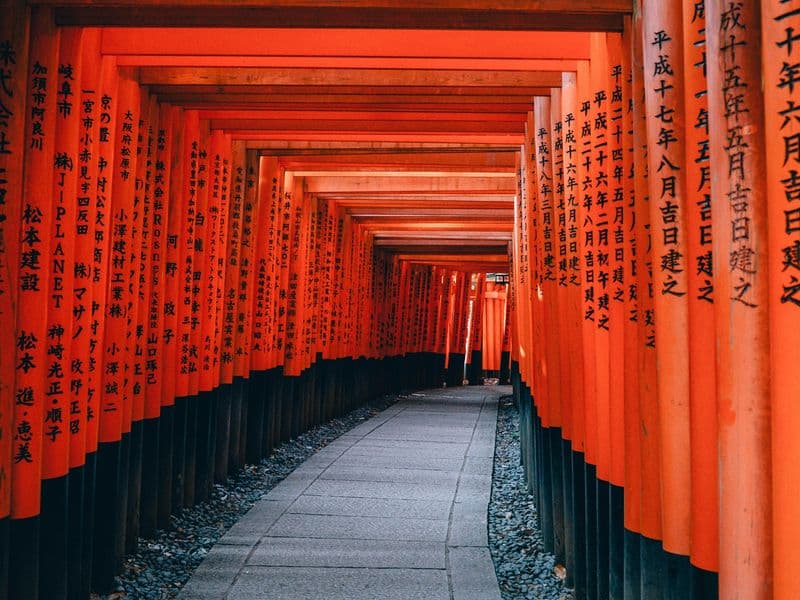
Fushimi Inari at dawn, Gion in the evening and a day trip to Nara.
Hiroshima
2 nights
The Peace Memorial and the floating torii gate on Miyajima.
Osaka
3 nights
Street food in Dotonbori and the best nightlife in the country.
Getting around
Train
$90–100 for Tokyo to Kyoto by shinkansen
Fast, spotless and always on time. Since the 2023 price rise the JR Pass only pays off for long, busy itineraries.
Bus
$30–60 for an overnight highway bus
Night buses between Tokyo, Kyoto and Osaka save a night of accommodation and cost a fraction of the train.
Ferry
$5–15 for a short island hop
The easiest way to reach Miyajima and the Seto Inland Sea islands.
Bicycle
$5–10 a day to hire
Kyoto and Naoshima are flat and made for cycling. Park only in marked bike areas.
What to eat and drink
Ramen
Noodles in rich broth, from pork tonkotsu to light shoyu. Order from the ticket machine at the door.
¥1,000, about $6.67
Kaiten-zushi
Conveyor-belt sushi, priced by the plate. Cheap, fun and very fresh.
¥150, about $1
Okonomiyaki
A savoury cabbage pancake cooked on a hotplate. Osaka and Hiroshima each have their own style.
¥1,000, about $6.67
Takoyaki
Octopus balls in batter, covered in sauce and bonito flakes. An Osaka street snack.
¥600, about $4
Onigiri
Rice balls wrapped in seaweed, the backbone of any convenience store breakfast.
¥180, about $1.20
Highball
Japanese whisky and soda, sold on tap in every izakaya.
¥400, about $2.67
Say it like a local
A few words go a long way. Tap “Hear it” to listen, where your browser can.
Hello
こんにちは
Say it like: kon-nee-chee-wah
Thank you
ありがとうございます
Say it like: ah-ree-gah-toh go-zai-mass
Excuse me
すみません
Say it like: soo-mee-mah-sen
How much is it?
いくらですか?
Say it like: ee-koo-rah dess-kah
Where is the station?
駅はどこですか?
Say it like: eh-kee wah doh-koh dess-kah
The bill, please
お会計お願いします
Say it like: oh-kai-kay oh-neh-gai-shee-mass
Delicious
おいしい
Say it like: oy-shee
Cheers!
乾杯!
Say it like: kan-pai
Tours in Japan
See all tours in JapanJapan, 6 hours
Kyoto at dawn: temples, tea and the backstreets
Walk Fushimi Inari’s torii gates before the crowds, then Kiyomizu-dera, a tea ceremony and lunch in Nishiki market.
Next date
Questions travellers ask
Is the JR Pass worth it?
Only if you are covering a lot of ground in a short time. For a simple Tokyo, Kyoto, Osaka trip, single tickets and night buses usually work out cheaper.
Do I need cash?
Less than before, but small restaurants, temples and rural guesthouses still take cash only. Convenience store ATMs at 7-Eleven accept foreign cards.
Can I go to an onsen with tattoos?
Many public baths still ban visible tattoos. Look for tattoo-friendly onsen, cover small tattoos with a patch, or book a private bath.
Why are there no bins?
Public bins are rare, so carry a small bag for rubbish. Convenience stores usually have bins by the door for things bought there.
How do I travel light between cities?
Use takkyubin luggage forwarding from your hostel or a convenience store. Your bag arrives at the next stop the following day for around 2,000 yen.