Europe
Italy
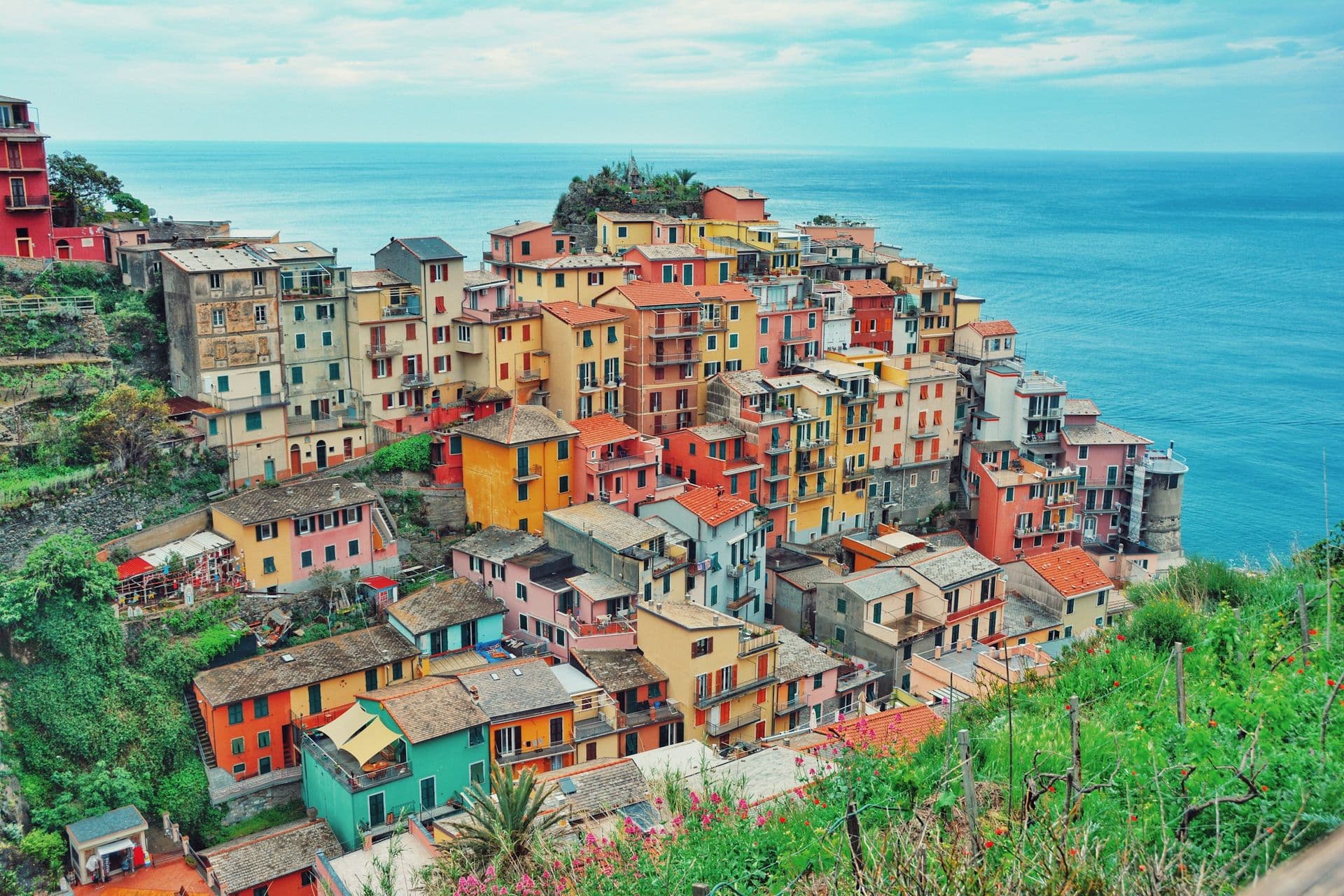
Espresso at the bar, trains between art cities and a €6 margherita in Naples.
Italy is easy to travel by train. Rome, Florence, Venice and Naples are all a few hours apart, and slow regional trains cost little more than a lunch. Hostels fill up fast in summer, so book ahead.
Eat like the locals to keep costs down: stand at the bar for coffee, grab pizza al taglio for lunch and turn up for aperitivo in the evening. The coastal paths of the Cinque Terre and the Amalfi Coast are free to walk.
Good to know
- Time zone
- GMT+1, GMT+2 in summer
- Plugs
- Types C, F and L, 230V
- Emergency numbers
- 112 for all emergencies
- Tap water
- Safe to drink
- Traffic drives on the
- Right
- Tipping
- Not expected, as most restaurants add a coperto (cover charge), but rounding up for good service is appreciated.
- SIM cards
- Iliad, TIM, Vodafone and WindTre prepaid SIMs with 100GB or more cost about €10–15 a month, and EU SIMs roam at no extra cost.
When to go to Italy
Best months to go: April to June and September to October. Pick a month to see what it’s like.
Bars show rainfall; numbers are the average daytime high. Amber marks the best months to go.
SeptemberBest time to go
Warm sea and fewer crowds. Harvest season in Tuscany.
- Daytime high
- 27°C
- Rainfall
- 70 mm
- Crowds
- Busy
| Month | Daytime high | Rainfall | Crowds | Best time to go |
|---|---|---|---|---|
| January | 12°C | 70 mm | Quiet | No |
| February | 13°C | 75 mm | Busy | No |
| March | 16°C | 60 mm | Quiet | No |
| April | 19°C | 65 mm | Busy | Yes |
| May | 24°C | 50 mm | Busy | Yes |
| June | 28°C | 35 mm | Peak season | Yes |
| July | 31°C | 20 mm | Peak season | No |
| August | 31°C | 30 mm | Peak season | No |
| September | 27°C | 70 mm | Busy | Yes |
| October | 22°C | 115 mm | Busy | Yes |
| November | 16°C | 110 mm | Quiet | No |
| December | 13°C | 85 mm | Quiet | No |
What Italy costs
Work out a budget for your trip, then check what everyday things cost.
$1,148for 14 days, about $82 a day (€999 in total)
| Cost | Per day | For the trip | |
|---|---|---|---|
| Bed | $35 | $490 | |
| Food and drink | $22 | $308 | |
| Getting around | $12 | $168 | |
| Things to do | $8 | $112 | |
| Everything else | $5 | $70 |
Per person, in US dollars. Flights and insurance not included.
What things cost
- Espresso at the bar€1.30, about $1.49
- Cornetto and cappuccino€3, about $3.45
- Pizza margherita in Naples€6, about $6.90
- Aperol spritz€7, about $8.05
- Hostel dorm bed in Florence€40, about $46
- Regional train, Florence to Pisa€9, about $10
- Colosseum, Forum and Palatine ticket€18, about $21
Routes through Italy
Where to go and how long to stay, for the time you’ve got.
14 nights, 5 stops
The big four art cities and the Cinque Terre, all linked by train.
Rome
4 nights
The Colosseum, the Vatican and carbonara in Trastevere.
Florence
3 nights
The Duomo, the Uffizi and sunset from Piazzale Michelangelo.
Cinque Terre
2 nights
Walk the coastal path between five cliffside villages.
Bologna
2 nights
Porticoed streets, tortellini and the best food markets in Italy.
Venice
3 nights
Get lost away from San Marco and ride the vaporetto down the Grand Canal.
Getting around
Train
$10–60 a trip
Frecciarossa and Italo high-speed trains are cheap booked ahead. Regional trains have fixed prices and never sell out.
Bus
$5–25 for a long trip
FlixBus and Itabus undercut the trains on long routes, and local buses reach Tuscan hill towns and the Amalfi Coast.
Ferry
$10–30 a crossing
Boats link the Cinque Terre villages, the Amalfi Coast and the lakes, and run out to Sicily and Sardinia.
Walk
Free, or about $20 for a Cinque Terre trail card
Italian old towns are compact, and the coastal paths are some of the best day hikes in Europe.
What to eat and drink
Pizza napoletana
Soft, blistered dough with tomato and mozzarella. Order a margherita in Naples.
€6, about $6.90
Carbonara
Pasta with egg, pecorino, black pepper and guanciale. A Roman classic, with no cream.
€12, about $14
Pizza al taglio
Pizza by the slice, sold by weight. The cheapest good lunch in Rome.
€4, about $4.60
Focaccia
Oily, salty flatbread from Liguria. Eat it warm from a bakery in the Cinque Terre.
€3, about $3.45
Gelato
Look for muted colours and metal tubs, not piled-up mountains.
€3, about $3.45
Aperol spritz
Aperol, prosecco and soda, often with free snacks at aperitivo hour.
€7, about $8.05
Say it like a local
A few words go a long way. Tap “Hear it” to listen, where your browser can.
Hello
Ciao
Say it like: chow
Good morning
Buongiorno
Say it like: bwon-jor-no
Thank you
Grazie
Say it like: grat-see-eh
How much is it?
Quanto costa?
Say it like: kwan-toh kos-ta
An espresso, please
Un caffè, per favore
Say it like: oon kaf-feh, pair fa-vor-eh
The bill, please
Il conto, per favore
Say it like: eel kon-toh, pair fa-vor-eh
Delicious
Buonissimo
Say it like: bwon-ee-see-moh
Cheers!
Salute!
Say it like: sa-loo-teh
Questions travellers ask
How do I keep food costs down?
Drink coffee standing at the bar, buy pizza al taglio or a panino for lunch, and go for aperitivo, when a drink often comes with a free buffet. Avoid restaurants with photo menus next to big sights.
Do I need to book trains?
Book high-speed trains a few weeks ahead for the cheapest fares. Regional trains cost the same whenever you buy, but validate paper tickets in the machine before boarding or risk a fine.
What is the coperto?
A cover charge of €1–4 a person for bread and the table, listed on the menu. It is normal and means you do not need to tip.
Do I have to pay to enter Venice?
Day trippers pay an access fee of €5–10 on busy days in spring and summer. If you stay overnight you are exempt, but you pay a tourist tax at your hostel instead.
Is pickpocketing a problem?
In Rome, Florence, Naples and on busy trains, yes. Keep bags zipped and in front of you, especially on the metro and around the big sights.